
The Ultimate Guide to Electrosurgical Units:
From Clinical Physics to Hardware Excellence
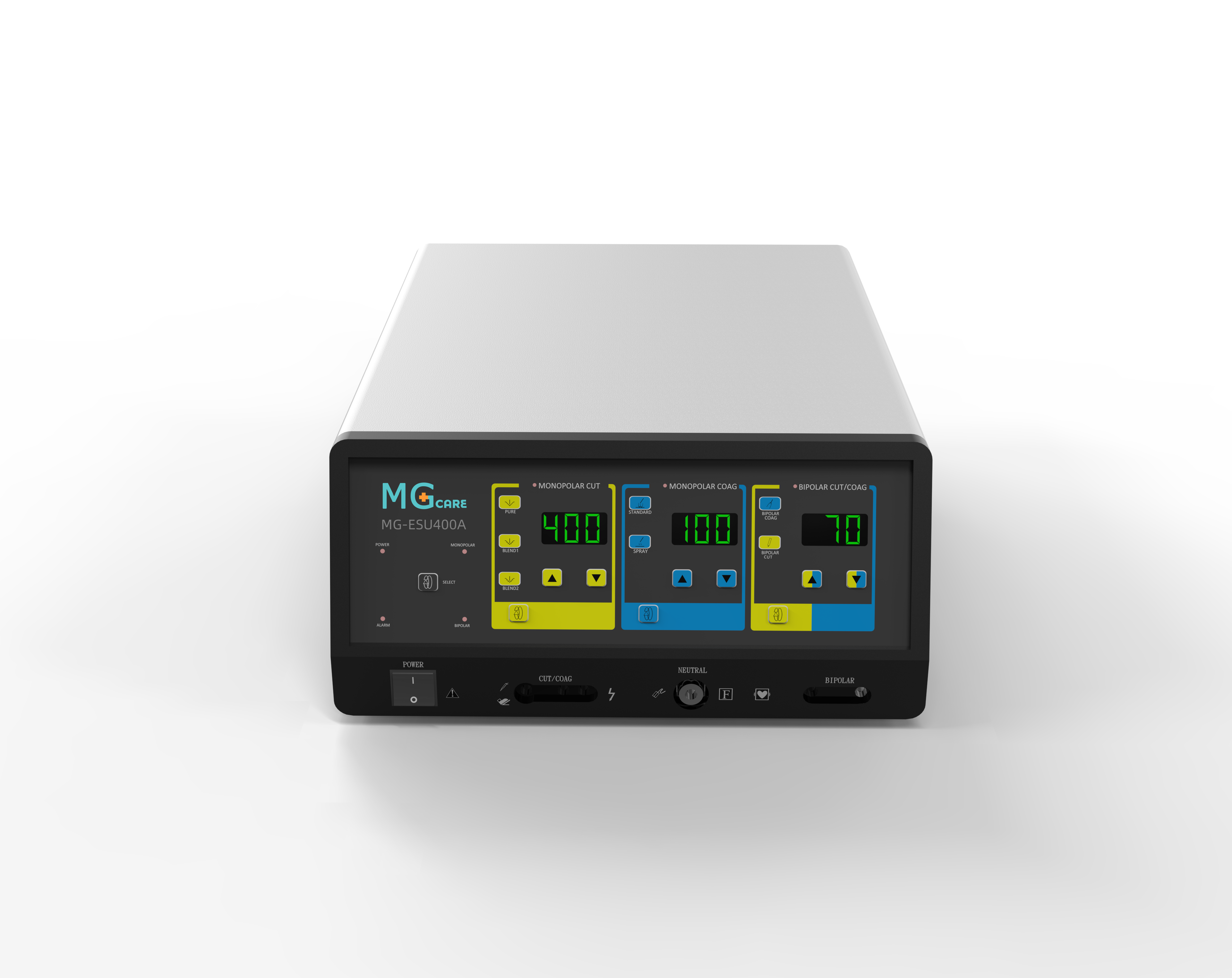
In the modern surgical landscape, the Electrosurgical Unit (ESU) has become as fundamental as the scalpel once was.
By utilizing high-frequency electrical currents (fixed at 500kHz in the MG-ESU series), it achieves precise biological effects: Clean cutting and Rapid hemostasis.
A Century of Innovation: The Evolution of ESU
The journey began in the 1920s when biophysicist William T. Bovie and surgeon Harvey Cushing revolutionized neurosurgery with the first spark-gap generator. Today, we have moved far beyond the "Bovie." Modern systems like the MG-ESU400 utilize solid-state digital generators and microprocessors, providing surgeons with a level of precision that was once unimaginable.
Inside the System: Anatomy of an Electrosurgical Solution
A professional ESU setup is an ecosystem of hardware designed to work in perfect harmon.
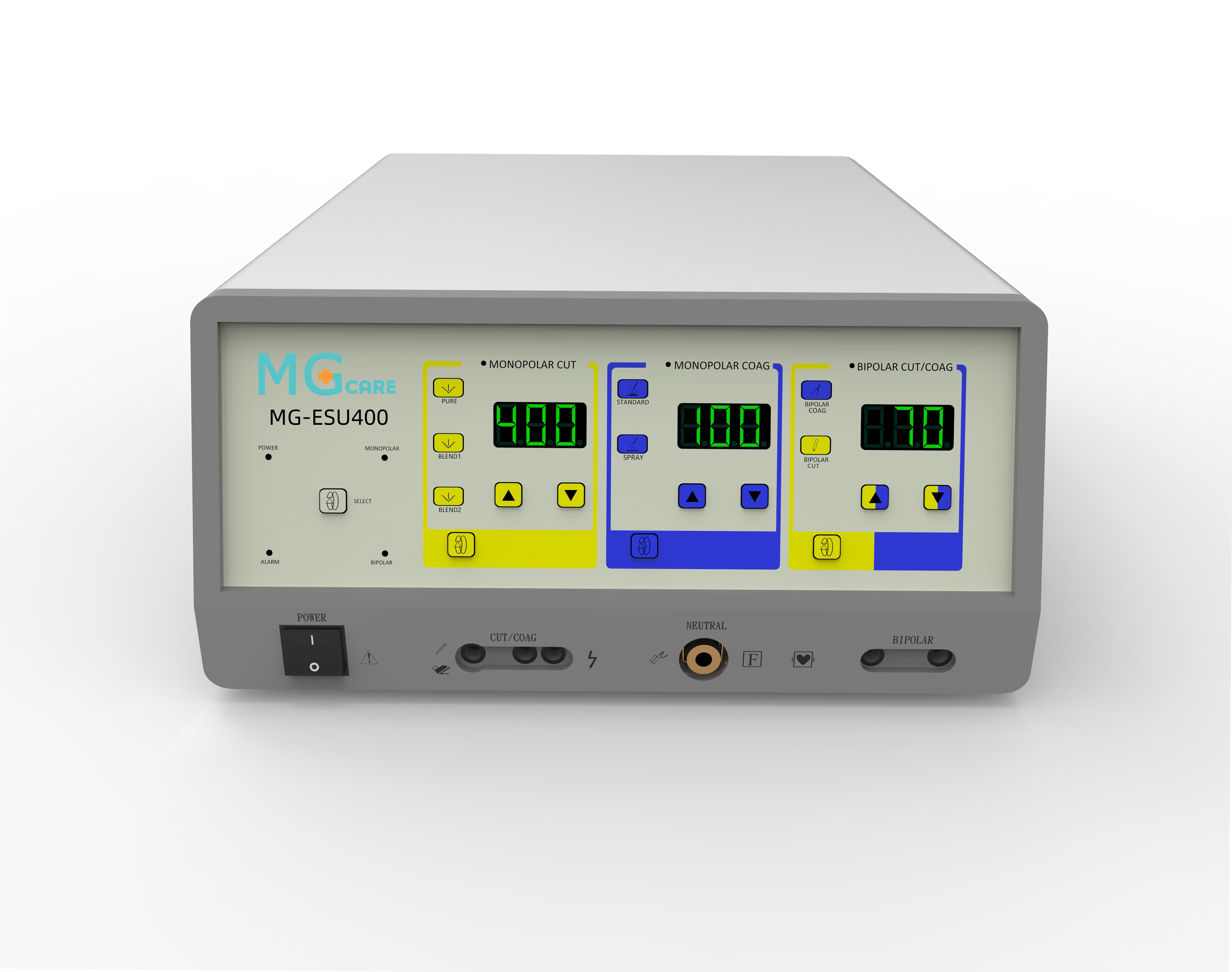
1. The "Brain": The ESU Main Unit (Generator)
The generator is responsible for converting standard 50/60Hz wall current into high-frequency radiofrequency (RF) energy (fixed at 500 kHz in the MG-ESU series). This specific frequency is critical because it is high enough to pass through the body without stimulating nerves or muscles—preventing the patient from experiencing electric shocks or muscle contractions.
🔵 MG-ESU Series Highlight: Our units (100W to 400W) feature Advanced Power Response Technology, which automatically adjusts the output power as the electrode passes through different tissue densities (e.g., from fat to muscle).
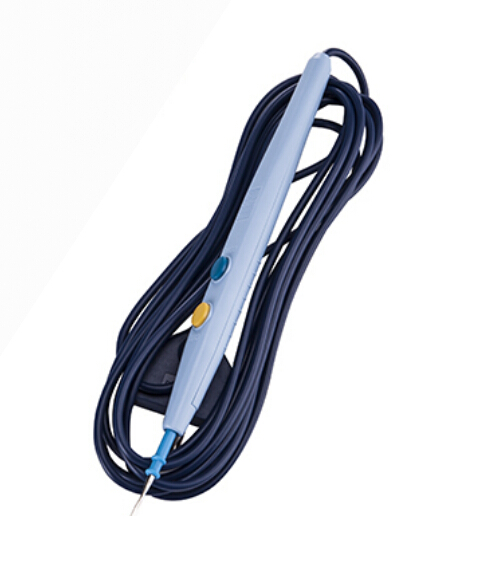
2. The "Hand": ESU Pencils and Electrodes
🔵 ESU Pencil: The sterile interface held by the surgeon. It usually features "Cut" (Yellow) and "Coag" (Blue) buttons.
🔵 Active Electrodes: These come in various shapes (Blade, Needle, Ball, or Loop) depending on the surgical requirement.
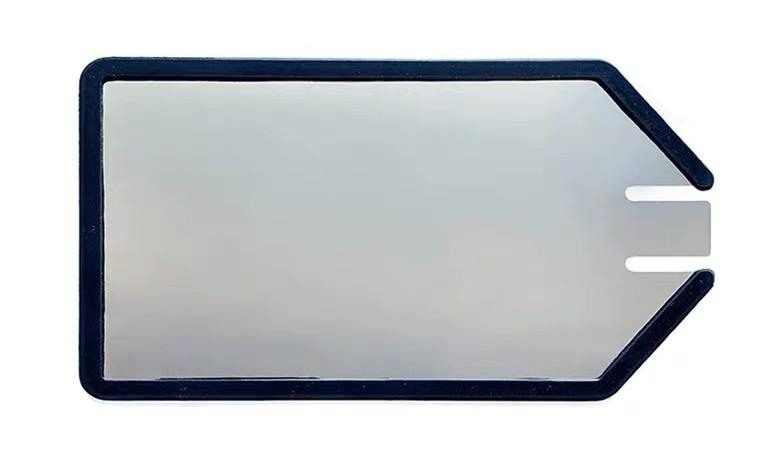
3. The "Guardian": The Neutral Electrode (Return Plate)
In monopolar surgery, the current must return to the machine. The patient return plate (negative plate) provides a large surface area for this current to exit the body safely.
🔵 Safety Tech: Modern MG-ESU units utilize REM (Return Electrode Monitoring). Our system includes an 8 Error-code alarm to detect if the plate partially detache , the system detects the increase in impedance and shuts down in milliseconds to prevent accidental burns.
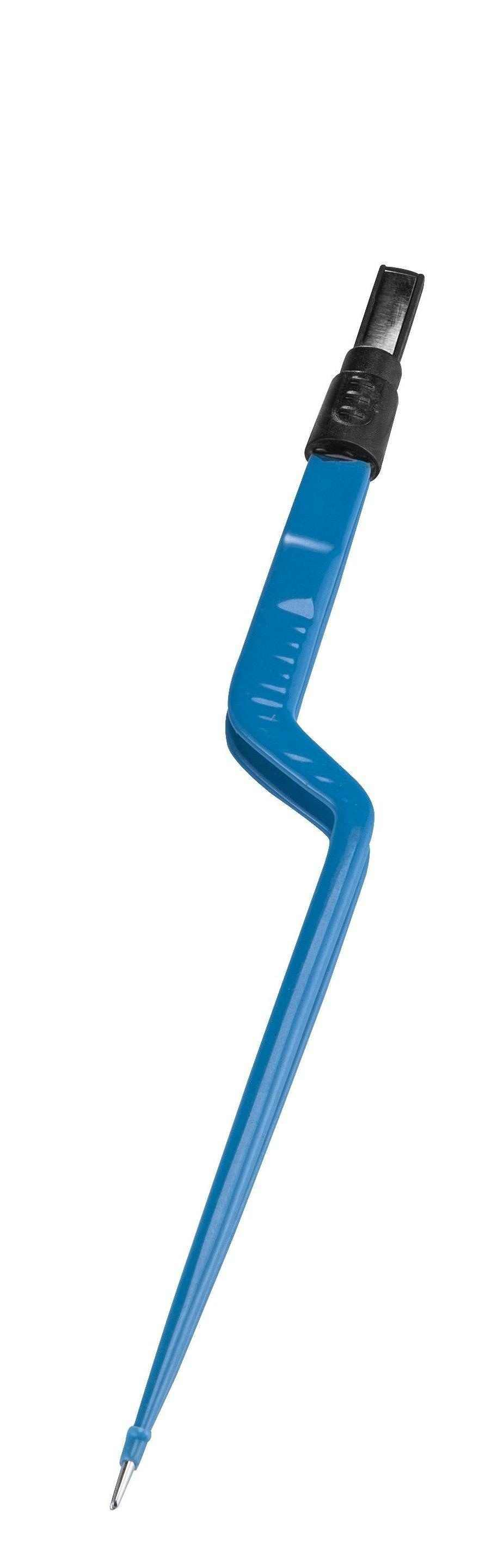
4. The "Precision Tools": Bipolar Accessories
Available on MG-ESU150 and above, bipolar surgery does not require a return plate. The current only travels between the two tips of the Bipolar Forceps, making it ideal for delicate procedures like neurosurgery or laparoscopy where localized energy is vital.
Decoding the Modes: Cut, Coag, and Blend
Understanding the waveform is key to clinical success:
🔵 Pure Cut:
A continuous 500kHz sine waveform that creates a clean incision with minimal thermal damage.
🔵 Coagulation:
A pulsed, high-voltage waveform that dehydrates cells to stop bleeding.
🔵 Blend Mode:
A hybrid of the two, allowing the surgeon to cut through tissue while simultaneously cauterizing the edges.
Why MG Care? The MG-ESU Series Advantage
At MG Care, we bridge the gap between high-end performance and cost-effective reliability.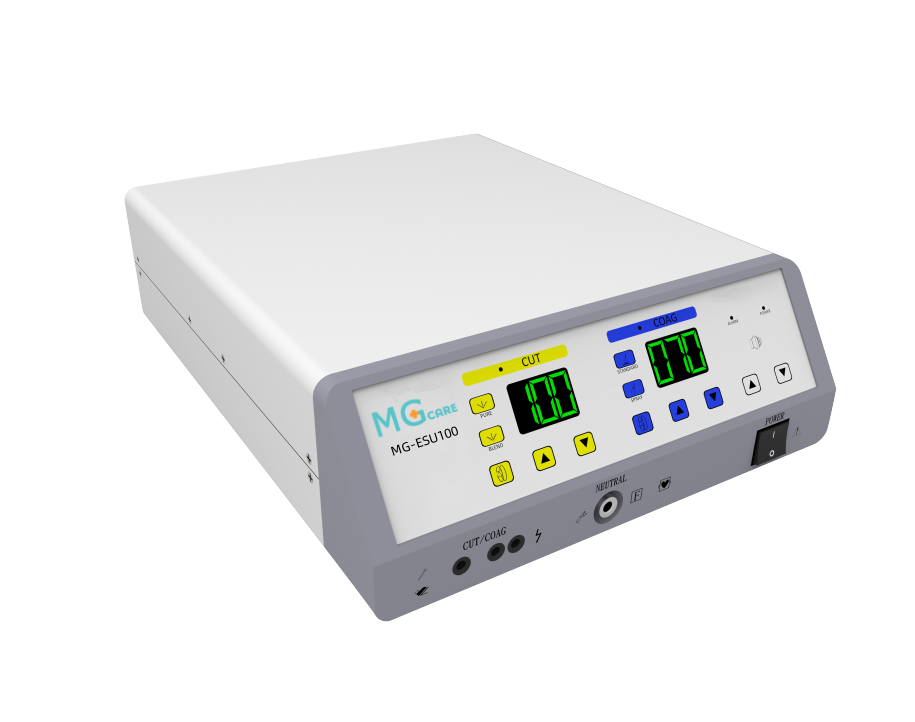
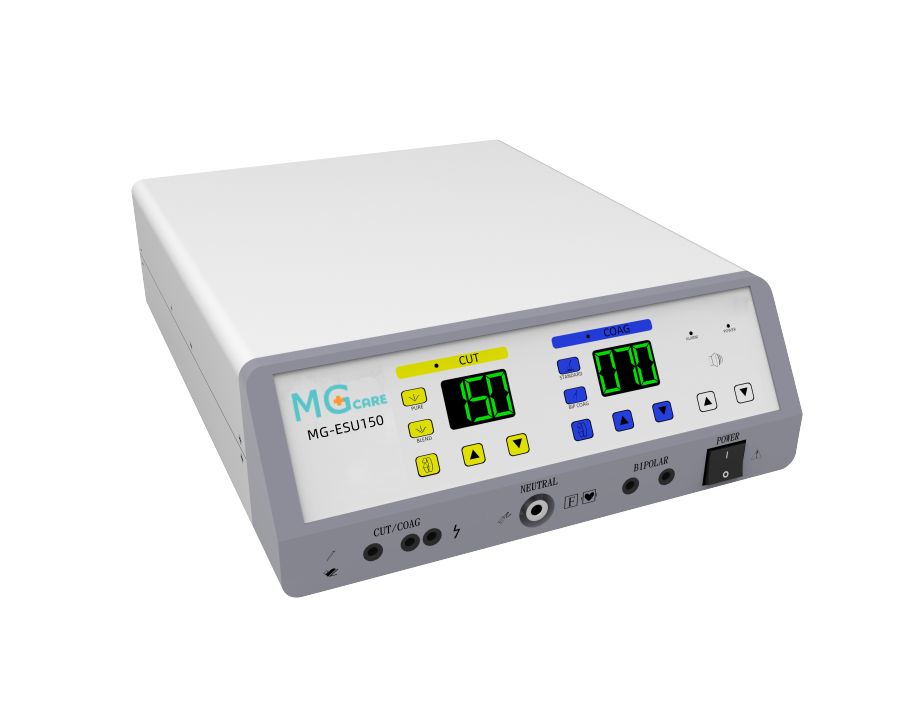
🔵 MG-ESU100/150:
Optimized for private clinics, dermatology, and dental surgeries. Compact, portable, and intuitive. (MG-ESU100 is a Dedicated Monopolar Cautery, 4.7kg).
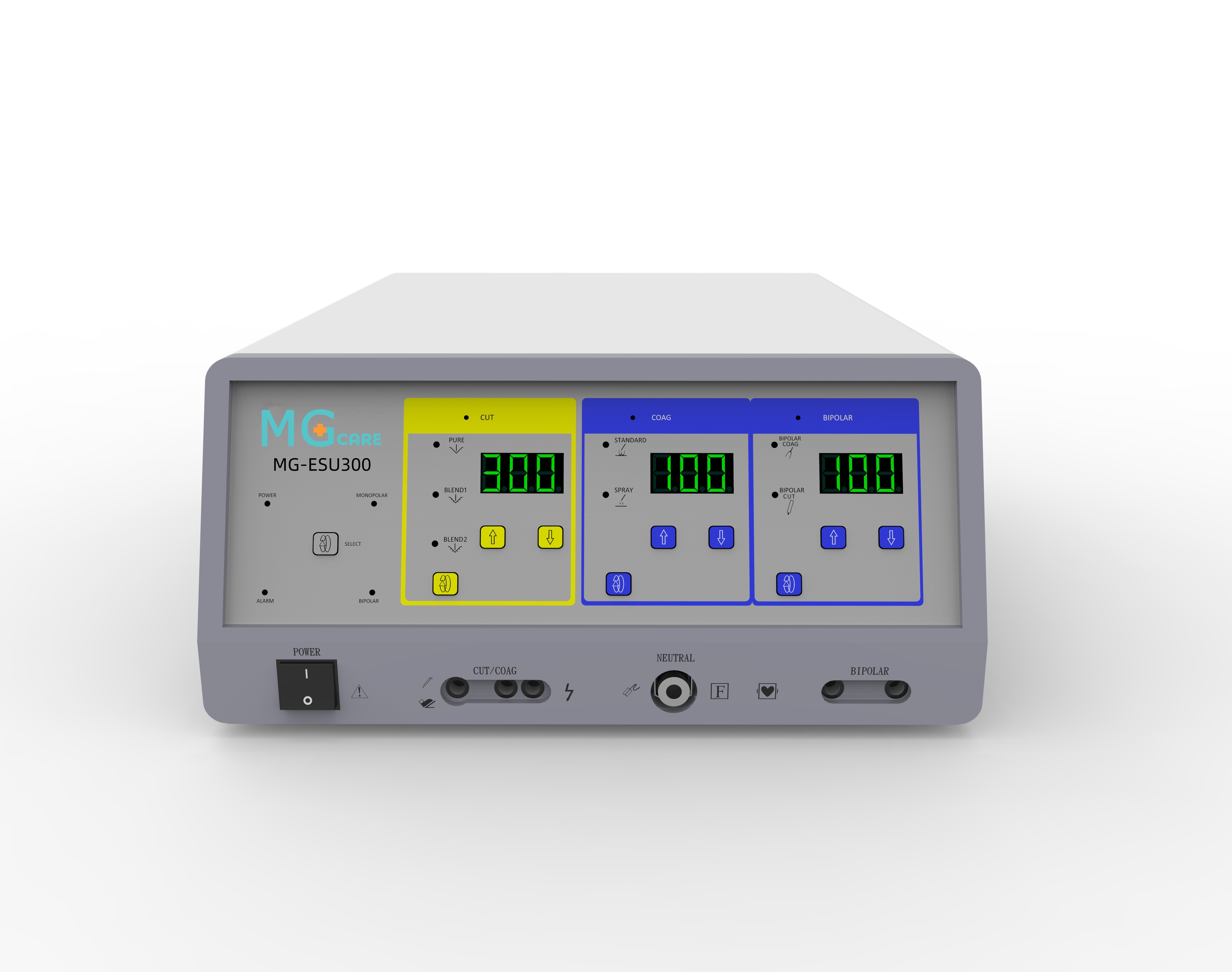
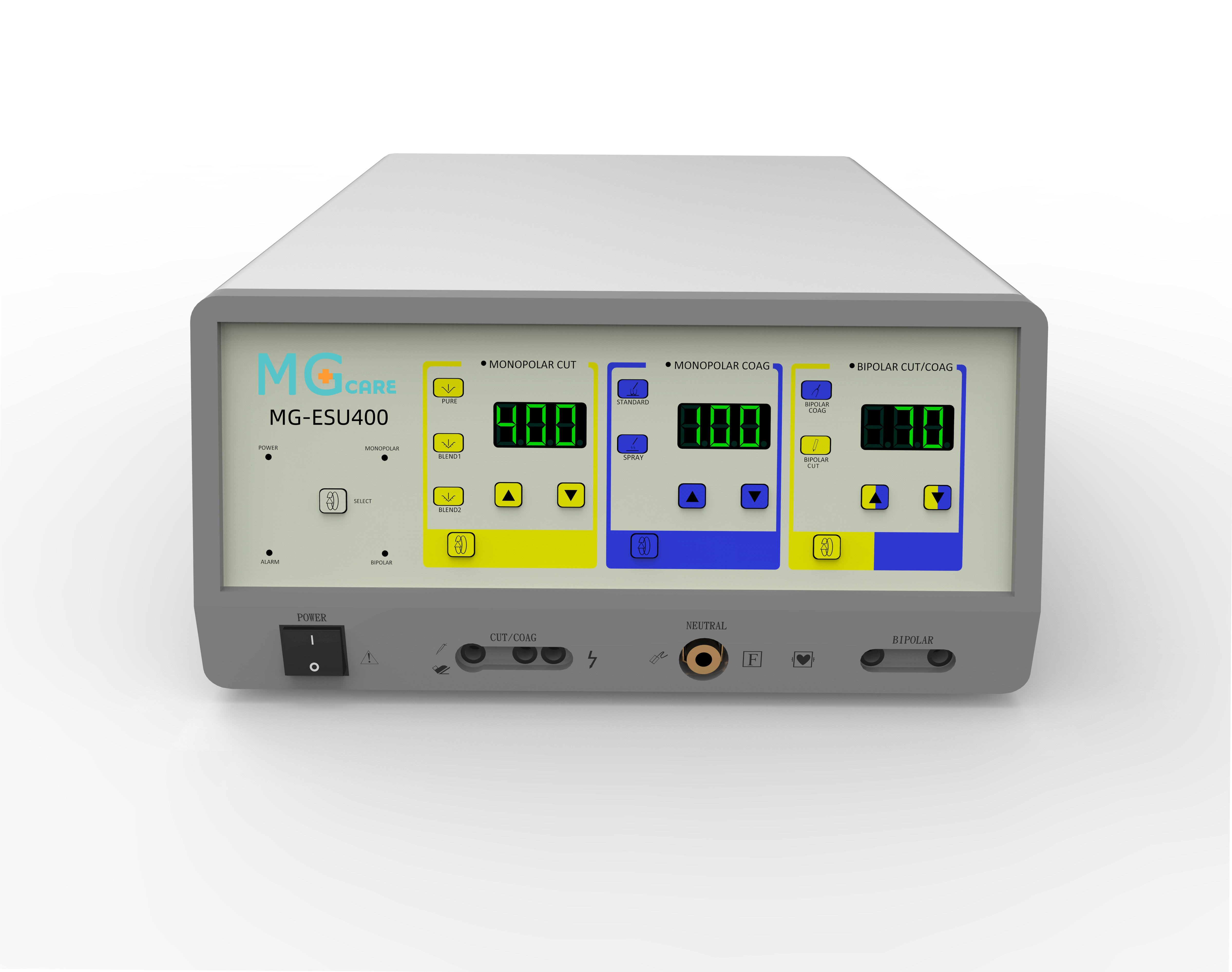
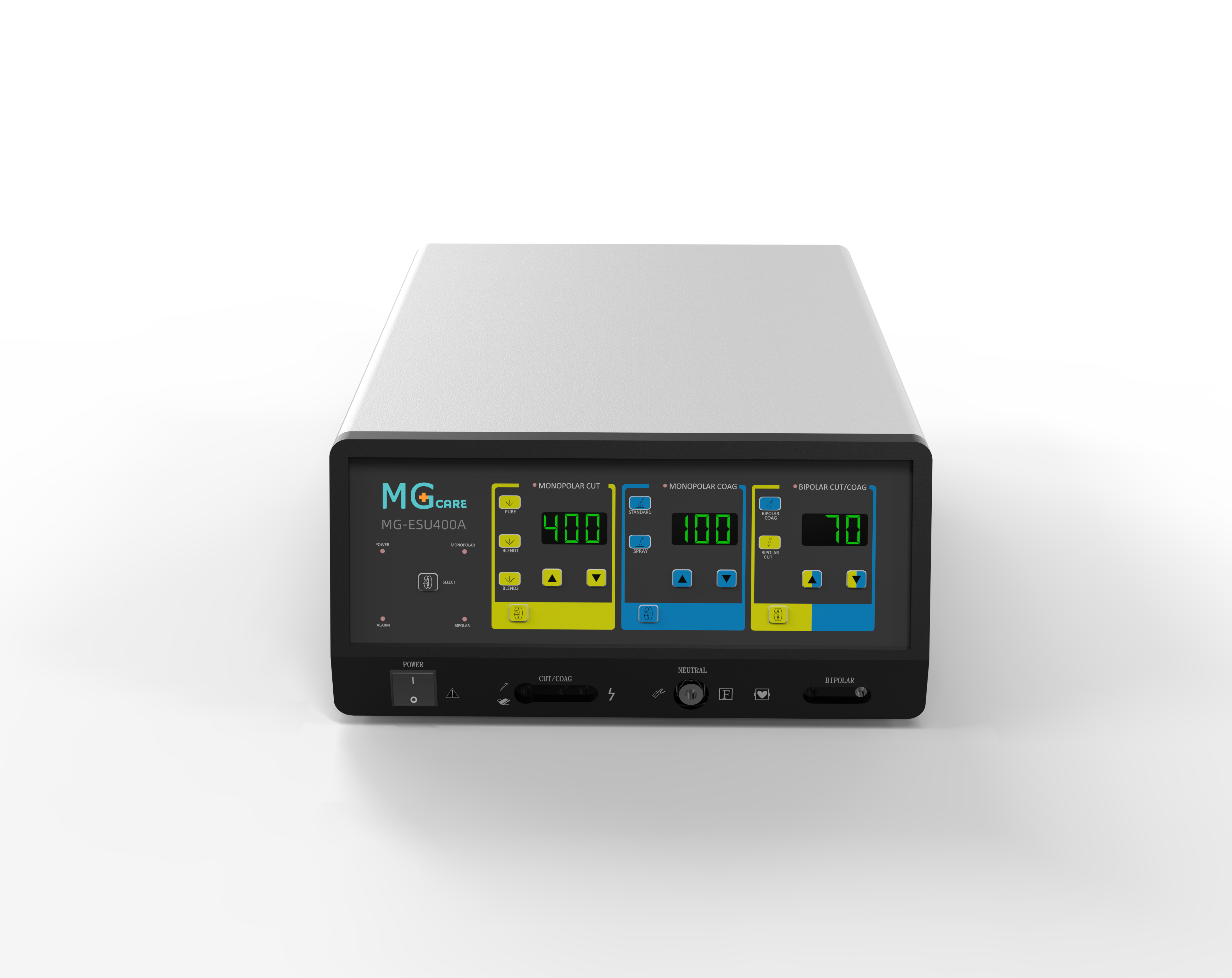
🔵 MG-ESU300/400/400A:
The heavy-duty workhorses for hospitals.
Featuring up to 7 working modes, REM (Return Electrode Monitoring) system, and independent output for monopolar and bipolar procedures.
🔵 User-Centric Design:
All our models prioritize a "Zero-Learning-Curve" interface, allowing surgical teams to focus on the patient, not the settings.
Frequently Asked Questions
Q1: Why is 500kHz the standard frequency for MG-ESUs ?
A: This range (fixed at 500kHz) avoids the "Faradic Effect" (nerve and muscle stimulation), ensuring that the energy only creates a thermal effect on the tissue without causing cardiac arrhythmias or muscle spasms.
Q2: Can MG-ESU units be used with underwater procedures (TURP) ?
A: Yes, the MG-ESU300/400/400A are designed with specific high-power modes to handle the high-impedance environment of underwater urological and gynecological surgeries (e.g., TUPR).